We would like to inform you that COLZANI Italian Contemporary Lifestyle has relocated from the showroom at Chevalier House, Genting Road.
COLZANI will continue to operate as the exclusive Asian representative and agent for our Italian furniture brand partners, including Nicoline, Potocco, Naturedesign, Ronda Design, and Status.
During this transition, the showroom at Chevalier House will continue to display and sell these brands until further notice, ensuring uninterrupted service to our customers.
For all enquiries, product information, project consultations, or to arrange a private meeting, please contact:
Until further notice, all meetings with COLZANI are available by appointment only.
We sincerely appreciate your continued trust and support and look forward to continuing to serve you with the finest in Italian contemporary furniture and design.
Why Choose a Stone-Top Dining Table? The Appeal of Italian Craftsmanship
For homeowners who prioritise longevity, material integrity, and understated luxury, a dining table with a stone top holds a distinctive appeal. When shaped by Italian hands, that appeal deepens, bringing together heritage craftsmanship and contemporary living. Within the realm of Italian craftsmanship furniture, stone-surfaced dining tables stand apart as enduring centrepieces that balance strength, beauty, and thoughtful design. In this article, we explore what makes these dining tables a considered choice for modern, design-conscious homes.
Key Takeaways:
What Defines the Appeal of Italian Stone-Top Dining Tables?
These tables prioritise material integrity, with each stone slab offering unique veining, texture, and character that cannot be replicated.
Premium stone surfaces such as marble, ceramic, and sintered stone are selected for both visual refinement and long-term performance.
Designed for everyday living, stone tops resist heat, moisture, stains, and surface wear while remaining easy to maintain.
Italian designers approach dining tables as architectural elements, focusing on proportion, balance, and sculptural clarity rather than ornamentation.
The fusion of traditional stone craftsmanship and modern finishing techniques results in tables that feel composed, enduring, and thoughtfully made.
Introduction
In refined homes, the dining table is more than a functional surface. It is where daily rituals unfold, guests gather, and design quietly reflects personal values. For homeowners who prioritise longevity, material integrity, and understated luxury, a dining table with a stone top holds a distinctive appeal. When shaped by Italian hands, that appeal deepens, bringing together heritage craftsmanship and contemporary living.
Italy’s reputation for fine furniture is not built on trends. It rests on centuries of working with stone, wood, and metal, refined through generations of artisanship. Within the realm of Italian craftsmanship furniture, stone-surfaced dining tables stand apart as enduring centrepieces that balance strength, beauty, and thoughtful design.
In this article, we explore what makes these dining tables a considered choice for modern, design-conscious homes.
Why Choose a Dining Table With a Stone Top
1. Unmatched Material Quality
Within Italian dining room furniture, stone is never treated as a commodity. It is respected as a living material, carefully cut, finished, and paired with bases that enhance its natural presence. Italian makers have long been stewards of some of the world’s most prized stone materials. From Carrara and Calacatta marble to travertine, ceramic, and advanced sintered stone, these premium natural stone surfaces are selected for both visual appeal and enduring performance.
Each stone slab carries its own character. Veining, mineral patterns, and tonal variations ensure no two tables are ever identical. This individuality resonates strongly with homeowners seeking authenticity. In high-end homes, such material honesty brings warmth and depth that manufactured finishes cannot replicate.
2. Superior Durability for Everyday Living
While stone always appears delicate, modern Italian stone tables are built for everyday use. Compared to wood or laminate, stone surfaces resist heat, moisture, and surface wear more effectively. This makes them well-suited to contemporary households that entertain often or enjoy cooking and dining as part of daily life.
Sintered stone and ceramic, in particular, offer exceptional resilience. These surfaces are non-porous by nature, which means spills and stains are less likely to set. They also resist heat, moisture, and surface wear with ease, allowing the table to retain its appearance even with regular use. This combination of durability and low maintenance supports a more relaxed way of living.
3. Sculptural Italian Design Aesthetic
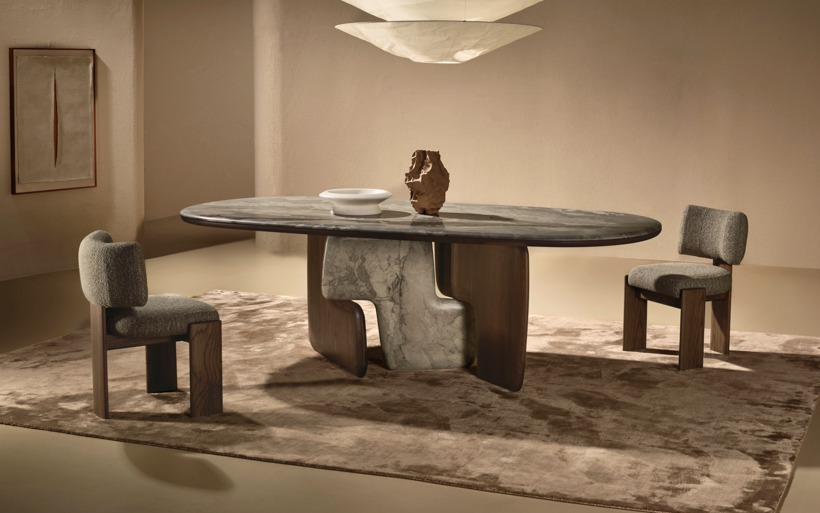
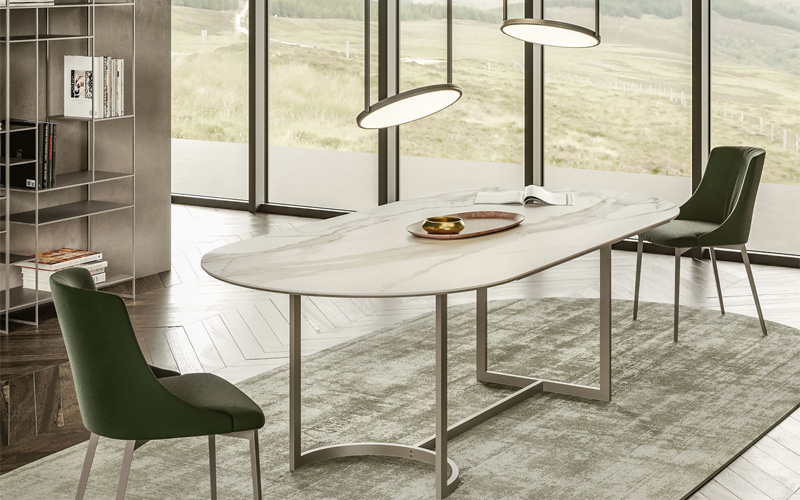
Italian designers approach dining tables as architectural elements within the home, considering how each piece relates to space, light, and movement. Rather than relying on ornamentation, they focus on proportion, balance, and form. Stone tops are often paired with sculptural bases in metal or solid wood, creating visual tension and harmony in equal measure.
Curved edges, minimalist silhouettes, and bold geometric supports are common, yet never overpowering. Curved edges soften the visual weight of stone, making substantial surfaces feel approachable rather than imposing. Minimalist silhouettes allow the material itself to take centre stage, while bold geometric supports provide structure without visual clutter.
Designed with restraint and intention, these tables assert their presence through material and proportion rather than visual excess. For homeowners incorporating luxury dining tables into a cohesive interior, this sculptural clarity brings a sense of order and quiet confidence to the dining space, allowing the table to elevate the room without dominating it.
4. A Perfect Blend of Tradition and Innovation
What truly distinguishes a dining table with a stone top is the quiet fusion of old-world skill and modern technology. Centuries-old stoneworking traditions inform how materials are handled, while advanced machining and finishing techniques ensure precision and consistency. Each table is conceived as a complete composition, where material, structure, and finish are resolved together.
Hand-polished edges, honed matte finishes, and seamless joins are not decorative flourishes. They are quiet indicators of time, skill, and intention. These details shape how the table feels to the touch, how light moves across its surface, and how comfortably it settles into a refined interior. In contrast to mass-produced furniture, such finishing reflects a slower, more considered approach to making.
Why Choose Italian Stone Craftsmanship
Choosing a stone-top dining table is ultimately about intention. It signals a preference for permanence over novelty, substance over surface appeal. Within the Singapore market, where high-end dining room design is thoughtfully considered and quality is closely scrutinised, Italian stone tables continue to resonate with homeowners who value thoughtful investment.
At Colzani, we approach each luxury dining table in Singapore with equal attention to material quality and how it fits into the client’s living space. With a commitment to 100% Italian-made production, bespoke craftsmanship, and attentive service from consultation through installation, we ensure that every table carries its origins with integrity.

 Colzani